

"Is this actually worth anything?" is the question behind almost every vintage find, and the honest answer is always a combination of factors — never just one. Here's what actually moves the needle, roughly in the order collectors tend to check them.
Condition, before anything else
Two identical pieces from the same year, same maker, same rarity, can be worlds apart in value based on condition alone. Collectors look past the obvious (chips, cracks, tears) to less obvious wear: fading from UV exposure, warping from humidity, and — on anything mechanical or electrical — whether it still actually functions as designed. A piece described as "works great" by someone who never plugged it in is worth a lot less than one with a clear, honest condition report.
Rarity is relative, not absolute
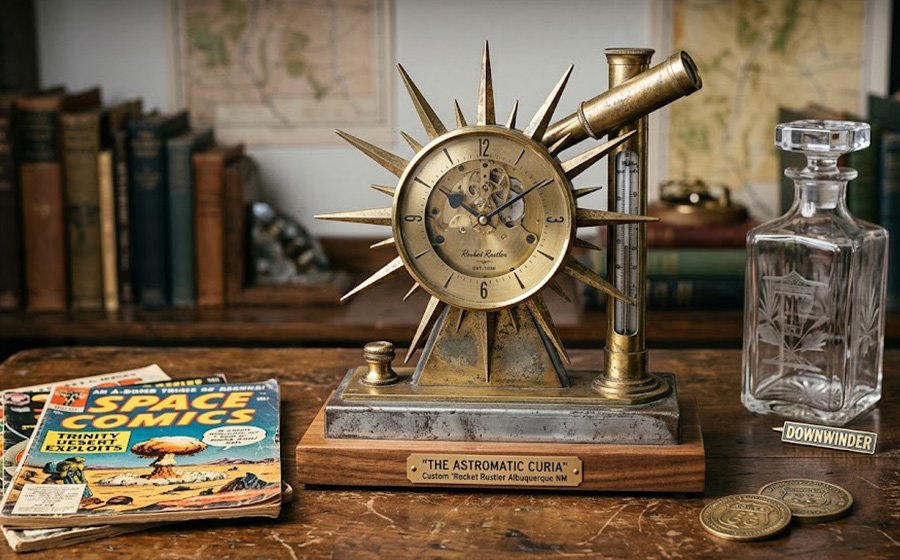
"Rare" only matters relative to demand. A genuinely uncommon item nobody wants is worth less than a common item with a passionate collector base actively competing for it. This is why some mass-produced mid-century items (a particular starburst clock, say) can be worth more than a one-of-a-kind piece from a maker nobody's heard of — scarcity has to meet an audience to translate into value.
Maker's marks and documentation
A stamped maker's mark, a manufacturer's label, an original receipt, or even a dated photograph of the piece in its original setting can meaningfully change what something is worth — not because the object itself changes, but because it removes doubt. Unmarked or undocumented pieces force a buyer to trust their own eye (or an appraiser's); documented pieces let the paper trail do some of that work instead.
Completeness
Original parts, original packaging, original accessories — all of it adds up. A record player missing its original tone arm, a toy missing its original box, or a sign missing its original mounting hardware isn't just less complete, it's a different (and usually less valuable) object than the one a collector set out to find. This is also where reproduction parts hurt: a "restored" piece that's quietly full of modern replacement parts is closer to a replica than an original, even if it looks the part.
Restoration is a trade-off, not a free upgrade
This one surprises people: over-restoring a piece can actually reduce its value to serious collectors, who often prize an honest, well-preserved original over a heavily refinished one — new paint over original patina, replaced upholstery, a repainted sign that's lost its original hand-lettering. A light, reversible conservation (cleaning, stabilizing, protecting) almost always helps; a full repaint or rebuild is a judgment call that depends entirely on what the specific collecting community values.
Put together, the pattern is consistent: value comes from confidence — confidence in what it is, confidence in its condition, and confidence that what you're holding is what it claims to be. That's the mindset worth bringing to any find, vintage pinball machine or otherwise.